
The end of May. And now?
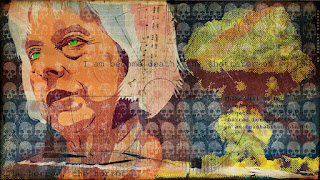
There was no possible good outcome from this general election; the outcome we've got is far from the worst we could have had. But it's time for the left in Scotland in general — and myself in particular — to reassess, and work out how we go forward.
First, let's be clear. For me at least, independence for Scotland is not an end in itself: it's a means towards achieving a more just, more equal and more peaceful world. If other means would achieve the same end more quickly or more certainly, independence would become much less important.
Don't be evil
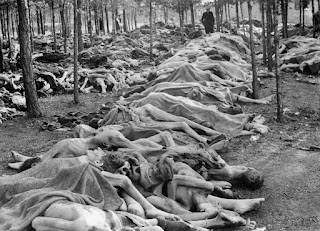
Three and a half years ago, I went to work for a bank in Glasgow. It wasn't a Scottish bank (not that this necessarily makes much difference), it was an international bank. I knew before I went to work for it that this bank was evil, although how evil it was I didn't know until I'd worked there some time. I went to work for them because I needed a job, and they offered me one. No-one else, at the time, did.
I know it's wrong, I thought to myself, but I don't have any choice.
On the slaughter of our raptors
Dear Roseanna Cunningham
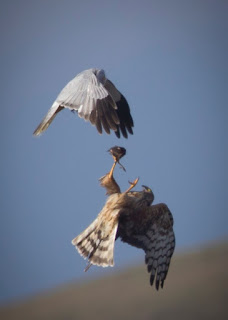
You'll have seen, I know, Raptor Persecution Scotland's letter to you following the slaughter of yet another hen harrier in Leadhills. Raptor Persecution Scotland are a gentle and polite body, and pull their punches rather dramatically.
Of means, and ends
I don't really understand my own mind. I watch my behaviour, as an ethnographer would, and try to infer intent from observed action. I perform experiments to test hypotheses. I'm sure other people don't do this — I'm sure other people don't need to do this.
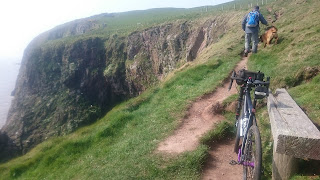
Last weekend I rode my bicycle up to the cliff path. In part, I went to see whether there were any razorbills or guillemots nesting this year (there weren't, or, if there were, I didn't see any). But in part I went consciously to test how suicidal I was. If you really want to die, I said to myself, here's your opportunity.
A really interesting map of Scotland
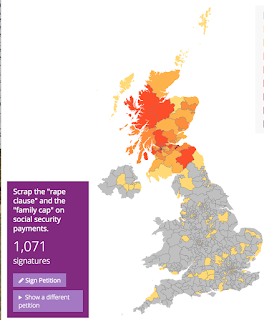
I've blogged before — a number of times — on maps which show the systematic difference in political culture between Scotland and England, but here's a really interesting one. This map shows the early signatories to a petition against the 'rape clause'. Why, on this issue, should there be such a sharp divide between Scotland and the rest of the UK?
Yes, OK, the campaign has been led by Alison Thewliss, an SNP MP. Yes, Nicola Sturgeon did reference it in her barnstorming interview at the Women in the World summit in New York. But this is a clause which affects women across the UK, a clause so perversely evil that it must surely offend people of any gender across the UK.