
Proposed plan for the Birnam workshop
This is a first draft outline plan for the Birnam Land Reform Workshop, to be held in Dunkeld on 24th January 2015. ** First off, I'm not a dictator. This is my suggestion for how we organise the day; if other people have better ideas, that's fine, let's discuss them.

Timetable and parameters
Land Reform: key issues
This is a note prepared in a hurry as a discussion document in advance of the land reform workshop at the Birnham Centre, Dunkeld, on 24th January. It is my view, not a consensus view, of the issues to be tackled. If you think I've missed significant issues, please contribute them to the discussion on the mailing list here.
 Use Scotland is lucky to be a net exporter of food. Land reform which ended up with our lowlands being less productive would not be a good thing. On the other hand, our lowland agriculture is now hugely capital intensive and depends on very high inputs of fossil hydrocarbons both in fuels and in fertilisers. This means that (with the exception of fruit and vegetable growing areas, which have high seasonal labour demands), it now employs few people. It's also probably not sustainable in the medium term, although that partly depends on whether new technologies emerge which provide a new high energy density fuel.
I want the whole of the moon

Michael Gray, on Common Space, writes: 'Peter Peacock, policy director of Community Land Scotland (CLS), whose members manage 500,000 acres of land, told Common Space that the Holyrood's movements on the subject are "encouraging".' Well, with all respect to Peter, that's not encouraging in the least. Scotland has nineteen million acres, so the proportion that is community 'managed' — and note, that's 'managed', not owned — is 2.6%. OK, that's the situation as it is now — before this vaunted bill. But as Peter very accurately says, 'a huge amount of effort will be put into [the reform bill] by vested interests.'
Ian Bell, in the Herald, writes of 'a bold new chapter in the history of our land', and goes on to gush 'If things happen as they could and should, Scotland will be altered permanently.' Aye, Ian.
Me and you and the Duke of Buccleuch
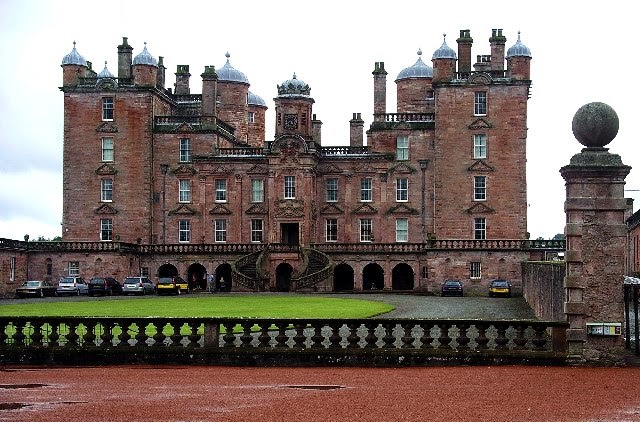
I've written before about an exponential land tax. Rather often in fact... Here I want to give a clear account of how it would work, with a computer program (in Clojure) so that you can fiddle with it yourself.
The code on this page is live: you can edit it. I recommend that (at least at first) you change only the constant and the exponent.
Quarter of a million crofts
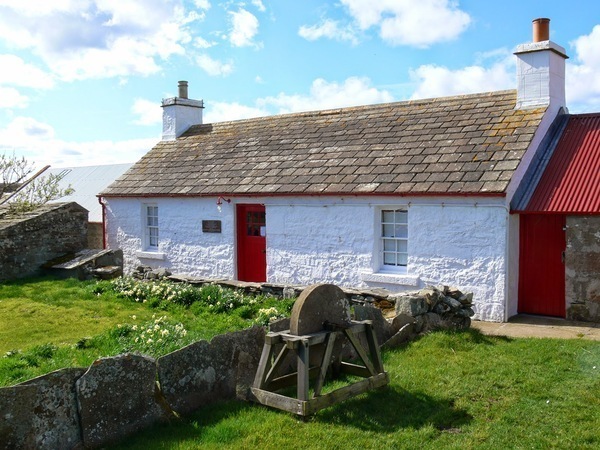
Imagine a Scotland where the rural areas are not desolate but vibrant, where the glens are not empty but populous as they were 250 years ago. Where the landscape is littered, not with desolate ruins of abandoned homes, but the cheerful life of new-built ones. Where the village schools are not empty and closing, but packed with children. That isn't a dream: that's achievable now, and all it takes is land reform.
The average agricultural holding in Scotland is 101 hectares: just over one square kilometre, or, to make it easier for you, the size of one of the National Grid squares on an Ordnance Survey map. That's enough, on reasonable land with reasonable husbandry, to provide an income for a family — and in many cases, more: enough to employ someone in addition. A countryside with one farm per square kilometer, with one or at most two working households per square kilometer, is a sparsely populated landscape, a landscape which finds it hard to support village schools, village pubs, village shops, village post offices.