
How have the mighty fallen

This is not an anti-Labour blog. I am not anti-Labour. I don't support them, but I don't hate them. I'm about to say some very harsh things about them. I hope they're harsh but helpful; however, even if they're seen as harsh and unhelpful I'd like to point out that I have in the past said equally harsh things about the SNP. This is not partisan or tribal harshness, I'm not seeking to advance the cause of any other particular party. I'm trying to explore why the Labour Party have fallen so far from the ideals on which it was founded.
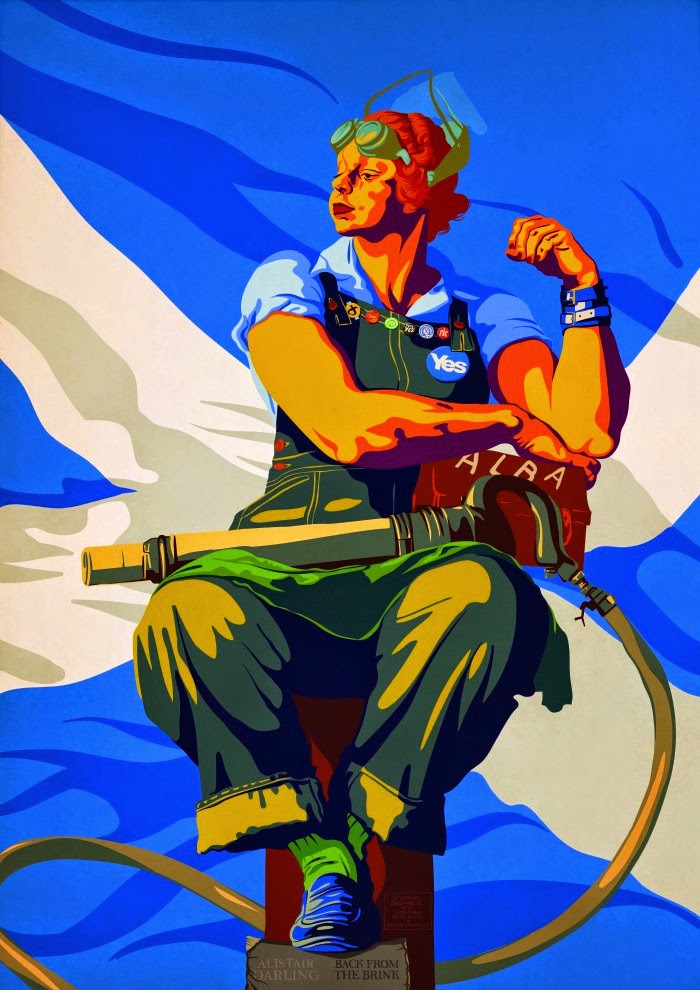
And I want to start with this absolutely shocking image. How does it shock me? Let me count the ways:
Scottish Devolution, and Socialism in One Nation
[This is a submission to the Smith Commission, written mainly by me but on behalf of Radical Independence Dumfries and Galloway. It's separate from (and deals with different issues to) my own submission, which is here. My instructions from Comrade Lucy were 'Just scrawl "full communism now" on rahbackuvvah silver rizla'. I may have written slightly more. Thanks to everyone who contributed.]
Dear Commissioners
Post Scarcity Hardware

Eight years ago, I wrote an essay which I called Post Scarcity Software. It's a good essay; there's a little I'd change about it now — I'd talk more about the benefits of immutability — but on the whole it's the nearest thing to a technical manifesto I have. I've been thinking about it a lot the last few weeks. The axiom on which that essay stands is that modern computers — modern hardware — are tremendously more advanced than modern software systems, and would support much better software systems than we yet seem to have the ambition to create.
That's still true, of course. In fact it's more true now than it was then, because although the pace of hardware change is slowing, the pace of software change is still glacial. So nothing I'm thinking of in terms of post-scarcity computing actually needs new hardware.
Submission to the Smith Commission
 Dear Commissioners
First let me say I wish you well in your immensely difficult task. While separating Scotland out of the Union might have been hard, keeping Scotland in the Union under present circumstances looks a great deal harder. Your commission was set up in the immediate aftermath of the recent referendum. Germane to the establishment of your commission were
- 'The Vow', signed by all the leaders of the major UK parties, whose terms as written are so woolly as to be virtually meaningless, but which was represented to the Scottish electorate as being a promise of DevoMax
- A series of extraordinary interventions by Gordon Brown MP, in which he promised — on the basis of what authority it is not clear — a solution '...as close to federalism as we can go in a country where one nation accounts for 80% of the population.'1
More on modelling rivers
I've been writing a lot about politics recently — and with reason. But now it's time to be getting back to writing about software, and, specifically, about river flows again.

I wrote almost a year ago that I had had the first glimmer of success with modelling river flows. Well, some success was right, but not enough success. I didn't have a software framework in which I could model other things I wanted to model in my world, nor one with which I could play flexibly. I also — because I was working with maps of my fictional world, and not the real world — couldn't assess how well my algorithms were working, particularly as I had persistent diagonal artefacts.