
Hegemony and madness: I rage!
[I wrote this in 2002, occasioned by the incarceration in mental hospital of a friend; I haven't published it before, but now I feel it may be useful to several people whom I know are presently going through periods of difficulty]
All of us are biased. All of us have our own demons, our history, our prejudices, our own understanding of the world; it is impossible for anyone, no matter how concerned, no matter how caring, no matter how professional, to truly act as advocate for another. Only the individual can speak for him or herself. And yet when an person is vulnerable, when their confidence is undermined, when they are going through difficult and unpleasant experiences, that person is not in the best condition to fight their own corner, to argue their own case. When a person is vulnerable, they may need an advocate, however imperfect, to argue their case. And when a person is vulnerable, they are most vulnerable to exploitation by would-be advocates who wish to argue another case.
So the best anyone can do when trying to present a case for another is to make their own biases, their own history, explicit: to make visible to everyone concerned where the advocate is coming from.
A letter from a Wicked Uncle
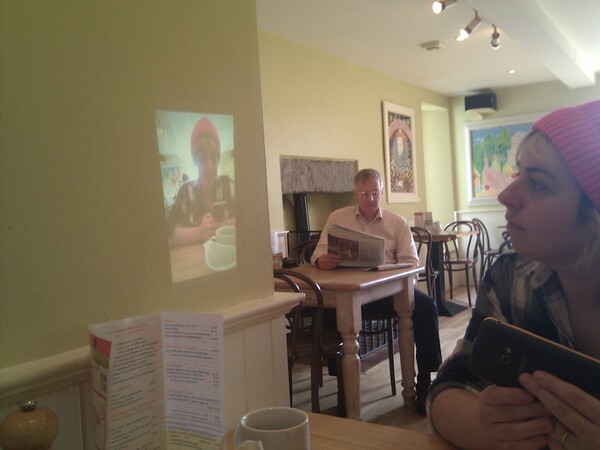
(this is mainly in reply to a blog post from my niece)
There are no conclusions. We live in a narrative arc of which we shall not live to see the end. I also am mad, but it does not matter. My goal — and, I suggest, yours also — should not be to cease to be mad, not be to be 'cured', but to live well and fruitfully as we are. To quote a famous prayer
The Great Replumbing
You'll recall, if you've been reading this blog with any attention, that I built this house in a hurry, as protection from winter, at a time when I was broke and suffering significantly from depression, and with the intention that it should be a temporary dwelling while I sought planning permission for the house I really wanted to build.
There were things which were done poorly, partly because I was broke and partly because I wasn't anywhere near the top of my game. I salvaged a gas hob a caravan that was being demolished. It was free, and was a heck of a lot better than the camping stove I'd used in the summer palace, but it was partly broken and burned poorly, creating lots of soot. I couldn't work out how to get to the jets to clean them, and over time all my pans became hideously sooty. Over the past six months, I've become increasingly aware that the dirt it was producing was itself depressing me.
Then, the hot water system. The hot water system was put together in a hurry, and not well. I plumbed the hot cylinder directly into the thermosyphon circuit rather than using its indirect coil, largely because doing so used less copper pipe and copper pipe is expensive. This meant, of course, that iron sludge from the back boiler in the stove accumulated in the cylinder and stained the hot water, which again isn't perfect.
The Winter Palace as philosophical object
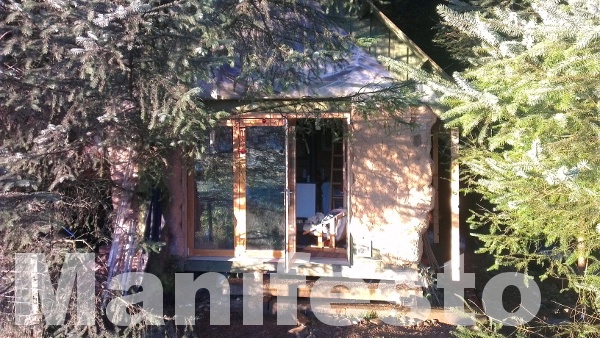
The first little pig built his house of straw, and so did I.
I've written previously about this house as structure and as politics. Now it's time to write about it as a philosophical statement, and as a philosophical statement, the fact that it is built of straw is significant.
Madness as symptom
OK, I know this is something of an obsession of mine, but that's OK. I'm mad, and mad people are allowed to have obsessions...
This morning on the radio yet another 'scientist' was interviewed about a theory he had of what's 'wrong' with mad people, and how you might 'cure' it. I get seriously pissed off about this trope.
What's wrong is, it's category error. It's missing the point. What's wrong with mad people is that there is nothing wrong with mad people. Granted it isn't comfortable being mad, granted we'd all of us very much rather not be mad. But there's nothing wrong with us. We do not have a disease. We are not a disease. We are a symptom. What's sick is society. We are people with a lower tolerance to stress — and with more dramatic abreactions to stress — than the norm. We're the canary in the mine shaft. We instrument the level of stress and disharmony in the societies in which we live.