
 I've written about cycling helmets and safety a couple of times before. See 'Using, not losing, your head', and 'Lies, damned lies, and cycle helmets'. But more often, as you know, I write about things which relate to public policy in Scotland. Now, sadly, I'm having to combine the two topics.
In brief, in August 2011 a driver named Gary McCourt mowed down a 75 year old cyclist, Audrey Fyfe, on the Portabello Road in Edinburgh. She was killed. Nor was this the first time that McCourt had mown down and killed a cyclist; in 1985 he had been jailed for killing 22 year old George Dalgity.
McCourt stood trial this month for the death of Audrey Fyfe. He was sentenced to 300 hours of community service, and banned from driving for five years. In passing this remarkably lenient sentence, Sheriff James Scott commented that Audrey Fyfe "...was not wearing a safety helmet and that in my view contributed to her death."
Savings, and loans

The text is obvious. Homes in the US are big — really big. Everyone has a big home. They're big in city centres, bigger in the suburbs, simply huge in the outer suburbs, still big in remote rural locations. They're also, claims the graphic, growing rapidly — the last panel claims the median home has grown in size by 50% in just twenty five years — interestingly, up to 2007, a date we'll come back to later.
The graphic shows, but doesn't explicitly say, that they're also staggeringly expensive. In New York, where the median size is apparently around 1500 square feet, the price is given as US$1295 per square foot, or about 1.9 million US dollars for an ordinary family house. That's not the extreme — Phoenix, Arizona is shown as even more expensive (why?!?). At the other end of the scale, housing in Dallas, Texas is stated to sell for US$59 per square foot, with a median size of 1650 square feet implying a price of just under a hundred thousand US dollars.
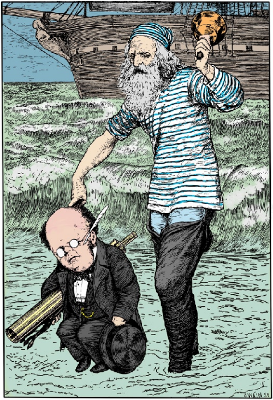 I'm a damaged person; I know that. I know that that damage happened mainly in (and because of) my first six months of primary school. I know that because of that damage, I'm much more vulnerable to stress than most people are — or than I would be if I hadn't been sent to school. I'm now reasonably confident that I will carry this damage — this vulnerability — for the rest of my life, that I will never be free from the risk of another major breakdown, never free from little breakdowns such as the one I had last week.
In 1998, I broke my back for the first time. As I was driven in the ambulance to Ayr infirmary, I thought it was a foregone conclusion that I would be paralysed; in a wheelchair for the rest of my life. Suppose I had been right. Suppose I had had the spinal damage which would forever prevent me from walking again. Would you consider that an 'illness'? Would anyone?
The answer is clearly 'no'. There's no infectious agent. There's no underlying biological cause. It's damage. Something is broken. It can't be repaired. It's an injury.
Review: Unraveled, by Alda Sigmundsdottir
 If I had written a review immediately I finished reading Unraveled, I would not have written this review. But I have been turning it over in my head for a couple of weeks...
The book is not what I expected. What did I expect? It's explicitly set against the background of the Icelandic kreppa, the meltdown of the banking system, and I expected that the events of the economic catastrophe would interweave with the collapse of the protagonist's marriage, acting, as it were, as a post-modern take on the pathetic fallacy. This doesn't really happen. The two collapses proceed at different paces and don't really counterpoint one another.
Again, the protagonist's husband is the British Ambassador to Iceland. As such he had to be involved in the most startling development in the whole economic mess — the British government's (almost certainly illegal) decision to declare the Icelandic banks 'terrorist organisations' in order to freeze their assets. I had expected the protagonist to see this as a profound betrayal, something which would completely overturn all trust and respect she had for him. Again, it doesn't really happen.
It's time tae rise as levellers again
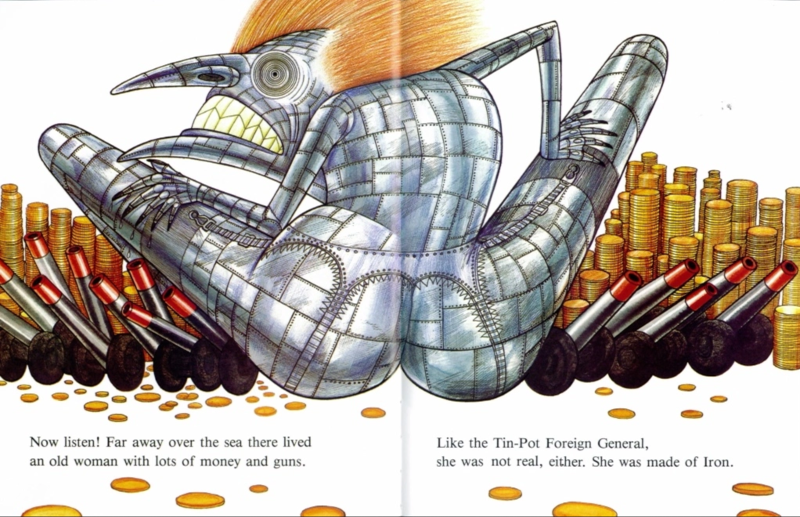
If you follow this blog, you know already that I am an essayist; you know I'm not a poet. So here is an essay. It's an essay that has been boiling up in me for weeks, and I've been trying to do the background research I need to support it. I haven't fully succeeded in that. There hasn't been time. But now the iron is hot, and I must strike. So here it is: an essay.
The wicked witch is lately dead
The tower clock is silenced
That else had toll'd her to her bed
Ding Dong. Yet when all's said
Her hagiographers are read
She's cast a saint, her people led
To 'freedom', a land promised —
Her people, not us lesser bred
It's time tae rise as levellers again