
The Hide
 The modular sousterran idea is all very well but I have to survive somewhere until I have planning permission to build it. I can't afford to rent, so I'm pretty much going to have to live — while I'm at home, at any rate — on my land. This design exercise is to see what is the cheapest and least conspicuous living space I think I can cope with through two winters. Cheap obviously means small, but surviving through winter means reasonably well insulated.
This design is fundamentally based on my present bed, which is an IKEA loft bed with a desk and bookshelves underneath — a quite cosy and comfortable working space. I started from there and thought, 'OK, how much more do I actually need'. A design constraint is the spacing of trees in my wood. They've mostly been planted at pretty exact two metre intervals, although the rows don't precisely align. I can, of course, cut trees down — it's my wood, and, furthermore, it needs to be thinned — but in the interests of hiding the hide I don't want to cut too many down. It won't be good for the planners to know I'm living on site while I'm applying for permission to do so.
The plan is a hexagon of side 1200mm — basically, that's the biggest hexagon I can fit onto two sheets of plywood. I could get a bit more space by using a 2400mm cuboid, but cuboids are ugly and that's 25% more wall. Also, it's easier to fit the hexagon into the wood than the cuboid, which would definitely need trees cut down.
Sousterrain revisited: there is a plan B
Having considered my earlier note on the design of a sousterrain for a month, I'm now going to rip it up and start again.
Reasons for not building in concrete
The first reason for not building in concrete is obvious. The embodied energy is huge. To present a largely-concrete sousterran as an energy efficient or 'green' building is hard to justify to me, to the planning authorities, or to anyone else. However, there are two other, pragmatically more compelling, reasons not to use concrete.
The joys of data transfer
OK, so, at this stage the main thing this blog is for is to find out how to import existing blog posts into Blogger. Brief summary: my existing blog uses a blogging engine I wrote myself back in 2000; it's quite a good blogging engine but it's not used by very many people because I didn't promote it enough back in the day, and so it's time to end-of-life it and migrate the existing users to something else.
Blogger has a mechanism for exporting and importing blogs. So, I thought, it ought to be possible to generate the export format, which is documented here, from my existing data and then import that. From the documentation it was clear that the format was slightly bizarre — a well formed XML wrapper around data which is actually XML and presumably also well formed but is represented as text. However, I generated stuff that looked right to me according to the documentation, and it failed to import.
Worse, the error message given was terse to the point of unusability, and there's apparently no documentation of the error codes available on the web.
End of eating dogfood
I wrote the Press Release System (PRES) back in 2000, and have kept my own blog on it since 2004. It wasn't a bad blogging engine. But I didn't promote it nearly enough, and very few people use it. So it no longer makes sense to maintain it — it's time to move to a more mainstream engine.
I can't help being slightly sad.
Site specific low cost housing for a windy site
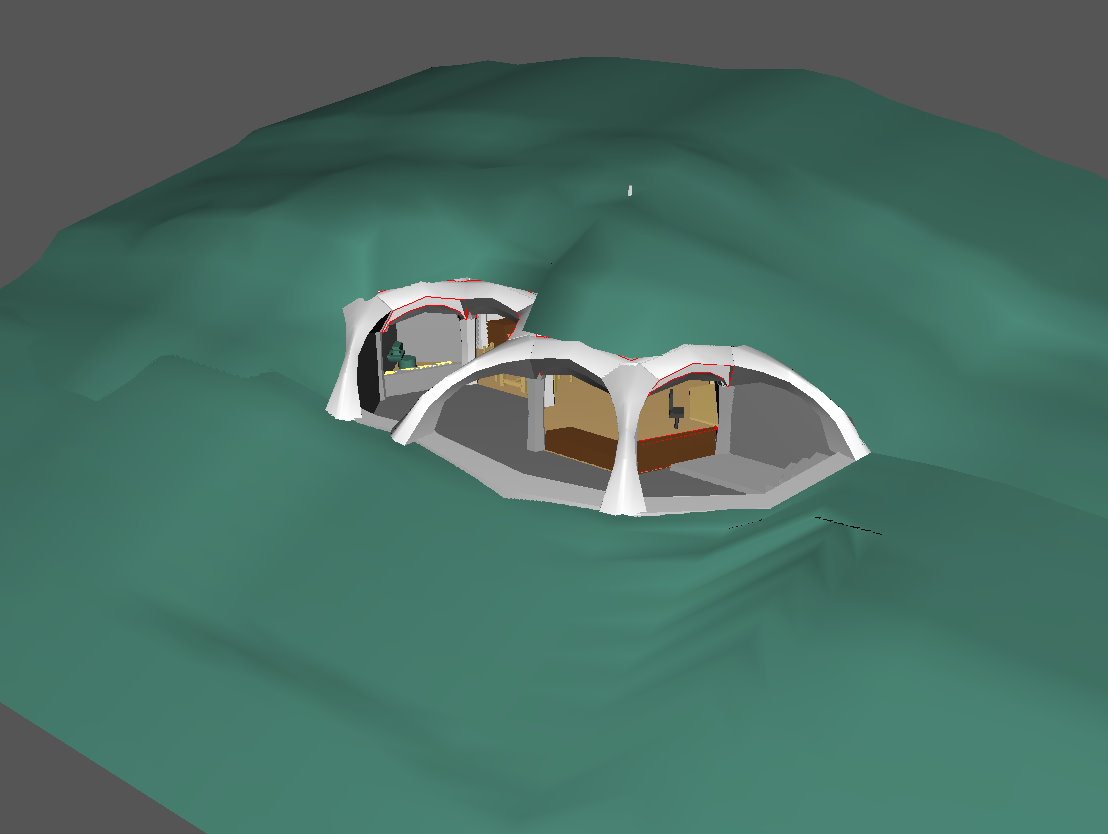 Part of the issue of building housing on the site we're considering is the wind speed, which is high. I imagine we're all going to want homes which don't take a lot of energy to heat, and the wind-chill effect on exposed walls is going to be considerable. The parts of the site which are most exposed to the wind are also the sunniest — the southern and western slopes. Of course, one can insulate, and straw bales are worth considering.
However the alternative, given that we have reasonably steep slopes, is to get down out of the wind. And if you do that you also lessen the landscape impact of the dwelling dramatically.
We all need structures which are low cost and simple to erect (since we're likely to be using mostly our own labour).