
The polemic, as detective story
If I'd met Steig Larsson, I'm pretty sure I'd have liked him. I like his values. And I absolutely agree with the thesis which I think caused him to write this book, which is that one of the most effective ways in which you can change the values of a society are through popular culture. Not through high culture, but through films people choose to watch, television programmes they stay home to follow, books they actually read.
This is a book to be read. It is, first of all, a ripping yarn. Its two protagonists are both well realised and interesting — Blomkvist, Larsson's own alter ego, is a warm, gentle, intelligent person of strong convictions and integrity. Salander — the girl with the dragon tattoo — is darker; profoundly damaged, severely autistic, desperately vulnerable, with ethics and values which don't mesh well with the society around her but which have an integrity of their own. Around them is a wider cast of characters, many of them interesting, most of them well drawn and realised.
It's a rattling good yarn. It's extremely well told — there are a series of clever misdirections early in the narrative which make you (made me) think you've seen a major clue to the mystery; in my case I was (mostly) wrong. The denoument, when it comes, is absolutely consequent on the evidence that has been presented — this is a whodunnit in that classic sense — but also profoundly surprising and shocking.
Days when I'm proud to be Scots
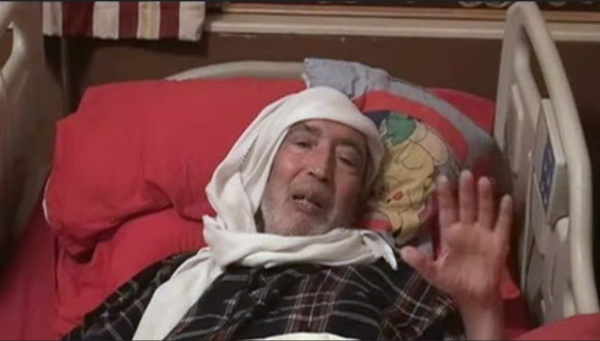 So, we released Abdelbaset Ali al-Megrahi yesterday. For the purposes of this note, let's simply assume that Megrahi was guilty as charged. Let's ignore the fact that the evidence in the case was clearly murky, and appears to have been manipulated by intelligence agencies, and by bribing witnesses. Let's ignore that al Megrahi consistently denied guilt.
A man has killed — in an appalling masacre — two hundred and seventy innocent people. Now he is in prison, in a land far from his home and family, and he is dying. Does he deserve to be released? No. Should he be released on compassionate grounds? That depends on whether those holding him have compassion.
Compassion is not deserved. Compassion is an act of grace, of mercy. An eye for an eye — justice, revenge, the law of vengeance, the obsessive levelling of scores — not only leaves everyone blind. It leaves everyone impoverished. It leaves a world devoid of moral values to look up to.
Not quite a chip off the old block
In 1936, Pierre-Jules Boulanger asked his engineers to design him a 'toute petite voiture', and they responded in style. They were French, and it showed. They designed a car with flair, with elan, with chic, and with a certain joi de vivre. They designed so well that their little car was still in production fifty-four years later, and won the hearts of millions of people across Europe and Africa. The Deux Chevaux was not only an enormously practical, reliable, adaptable and economical vehicle, it was also the world's most underrated sportscar — more fun to drive than anything else I have driven with the sole exception of a Lotus Elise. I loved mine. It was my favourite car ever.
Which is why the petite voiture which sits outside my house now is another Citroen: a C3 Pluriel, a car whose design pays conscious homage to the Tin Snail. Less characterful, perhaps, blander, the curves rounded off into something closer to a child's toy aesthetic, but echoing the high-arched roofline and the bulbous curving bonnet. And echoing the original in other ways, too — in it's folding canvas roof, in its claimed versatility.
I've lived with mine for nine months now, for ten thousand miles. I like it very much. But it has to be said that as a replacement for the Deux Chevaux, it fails.
John Knox stirs in his grave

OK, let's start at the beginning. My party — the Scottish National Party — has introduced legislation making it an actual crime for girls under sixteen to have sex, and is now proposing to make it a crime to have images of 'rape'. These two matters are not distinct, they're linked. And to talk about why they're linked I want to start by agreeing that, yes, there are public policy issues here.
Young people are vulnerable to older people. When very young, they're very vulnerable; we teach young people to view adults as authority figures. Most of the time this is a good thing. But it means that young people are vulnerable to sexual advances from older people, sexual advances which they might have rejected from someone who did not have perceived authority. And, young people inevitably have less experience of sexuality than their elders; they don't have an appropriate repertoire with which to respond, and this too makes them vulnerable. So young people do have to be protected, and it's right that, as a society, we have rules which prevent adults predating sexually on children.
Sex, adolescents and the law
Adolescents have sex.
This impacts on their lives negatively in a number of ways — certainly under-age pregnancy is now a very serious matter for public policy concern and the spread of sexually transmitted diseases among the young is also worrying. It's obviously undesirable to have adults predating sexually on children. It's also highly undesirably that young people of either gender should be pressurised into sex before they're emotionally ready.
But that's precisely the point.